New World Hoarder
The Epic Journey
in Pixels
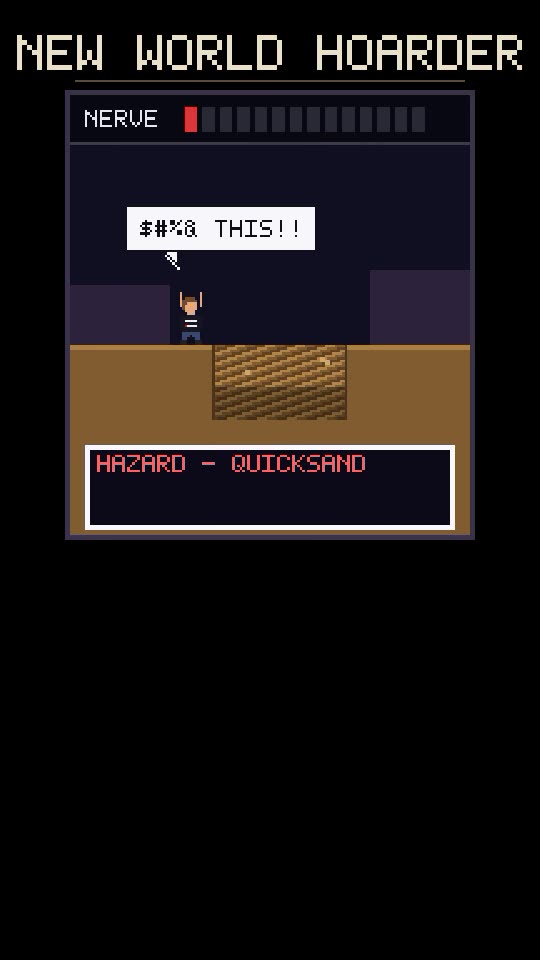
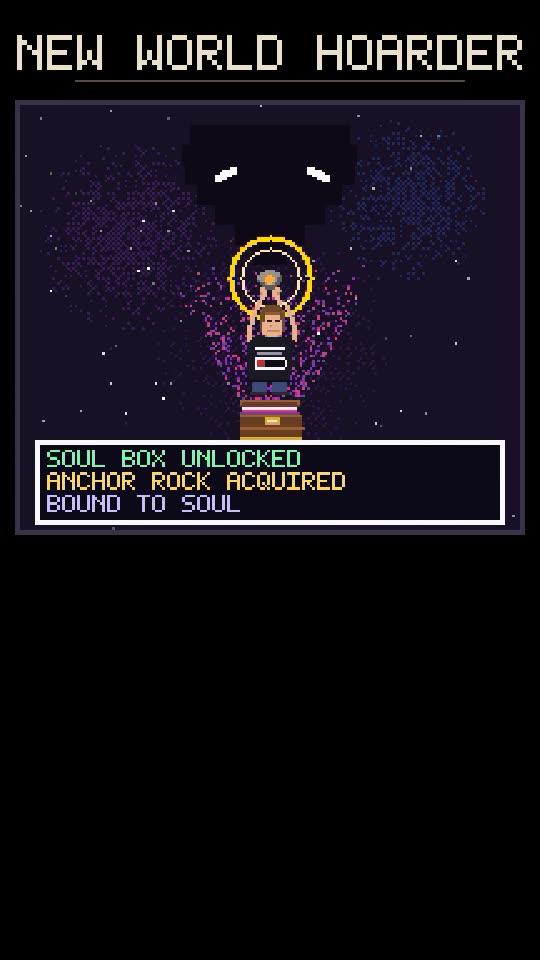
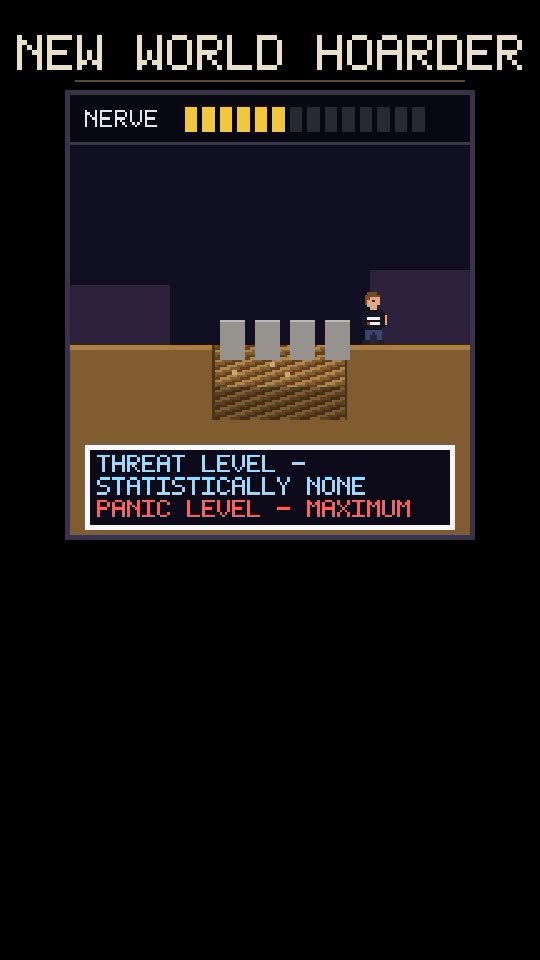
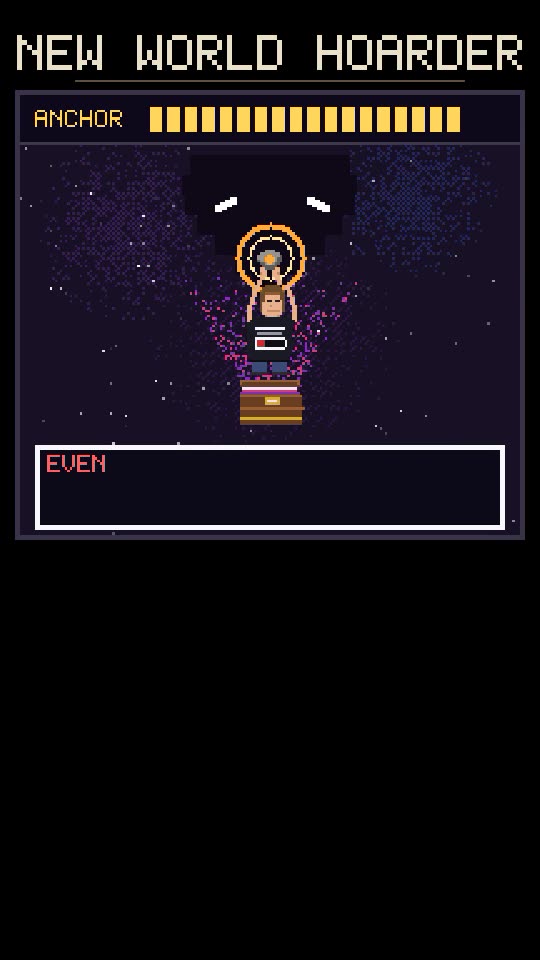
Four short spots. One middle-aged man, one rock he refuses to put down, and one quicksand pit he did not sign up for.
Behind the screen
Nothing in those four spots is stock. No asset packs, no sprite libraries, no sampled game audio. Every pixel and every note was generated from source, which took longer than buying a template and is the only reason they look like anything.
The sprites
Hand-authored, one character per pixel, in a grid you could read as text. Aren is 28 columns wide. The red segment on his shirt is three pixels.
The type
A 5×7 bitmap font, drawn by hand. Real fonts get antialiased, and at this scale that puts grey fringe on every letter. A bitmap font is pixel-exact by construction.
The music
Synthesized from scratch — two pulse channels, a triangle bass, a noise channel. Modelled on the NES sound chip, but every note is original. Nothing is lifted from a game you recognise.
The scaling
Drawn at native low resolution, then upscaled exactly once by a whole number. Any smooth resize anywhere in the chain and the pixels turn to mush.
The upgrade
In spot four the world jumps eras mid-shot. Both are rendered into the same frame, then swapped in hard eight-pixel bands. A crossfade would have killed it since nothing in 1982 could fade.
The white flash
Three frames that work together to hide the character swapping between two completely different sprites. Cartoons have used the same trick for eighty years.
The book is better than the ads.
New World Hoarder updates weekly on Royal Road and it's free to read. Join the list and the prologue — audio version only available here — arrives read aloud by the audiobook narrator.